The application of ultrasound imaging has revolutionised the practice of regional anaesthesia. ASURA brings you an international faculty at the cutting edge of contemporary practice.

Across sub-Saharan Africa, between 60% and 70% of operating theatres have no pulse oximeter. The Lifebox project brings low-cost, good quality pulse oximeters to low-income countries and you can help.

Limited number of copies printed order you copy today!
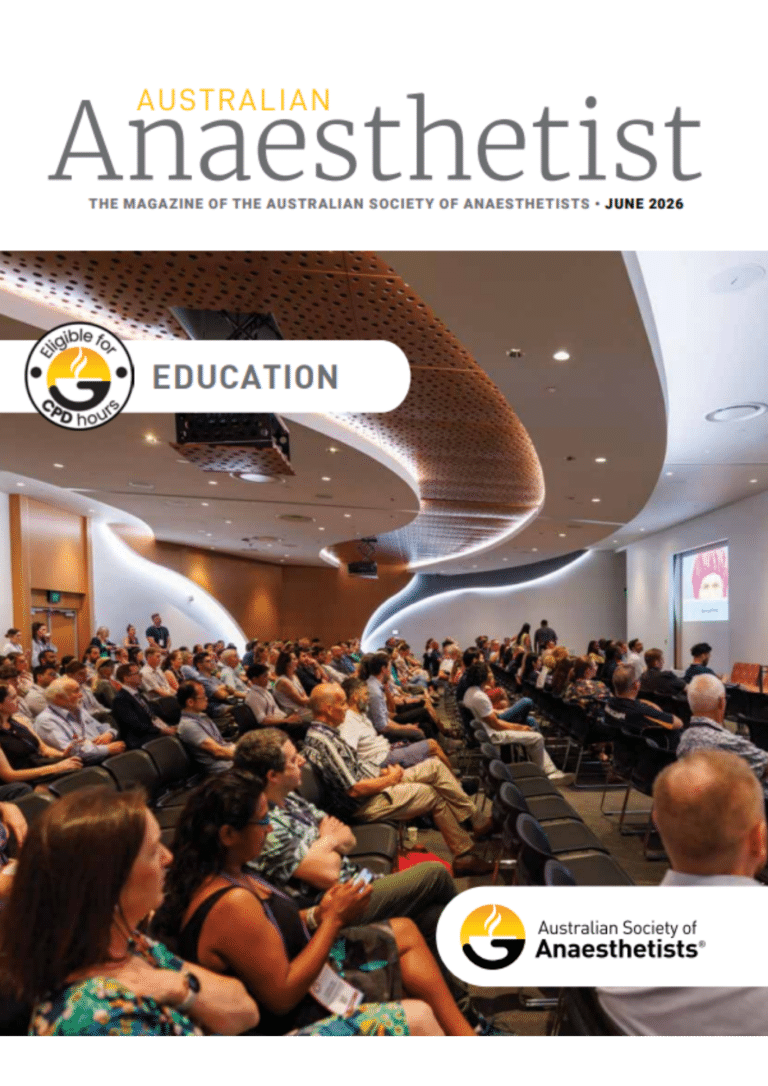
The November ASA news is now available in the online flip book format.
Please read on for information on contributing to the ASA news, advertising rates and archived issues.

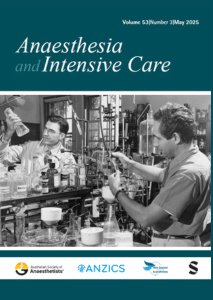
Anaesthesia and Intensive Care is published by the ASA and is the official journal of the ASA, Australian and New Zealand Intensive Care Society and New Zealand Society of Anaesthetists.
Visit the Anaesthesia and Intensive Care Journal website to view the latest issue and access the online archive.
Read on for information on submitting an article to or advertising in the Anaesthesia and Intensive Care Journal.
People often think of anaesthesia as being ‘put to sleep’. However, that’s not strictly true. Usually, the anaesthetist puts you into a state of carefully controlled unconsciousness.
The Anaesthesia & You brochure is a great resource for anaesthetists to hand to their patients prior to a procedure.
The Medical Warning Card is for anaesthetists to give to patients who have had either a significant airway problem or an adverse reaction to an anaesthetic.
This credit card sized card should be given to patients to keep in their wallets and can be ordered from the ASA.

This is the lecture given by the ASA President at the end of his or her term. The following Geoffrey Kaye Orations are available for download.
| Dr Wotherspoon 1996 | |
| Dr Clarke 2008 | Dr Hains 1994 |
| Dr Deacon 2006 | Dr Richards 1992 |
| Dr Bradley 2005 | Dr Ashton 1990 |
| Dr Hodgson 2002 | Dr Barry 1989 |
| Dr Westhorpe 2000 | Dr Walter Thompson |